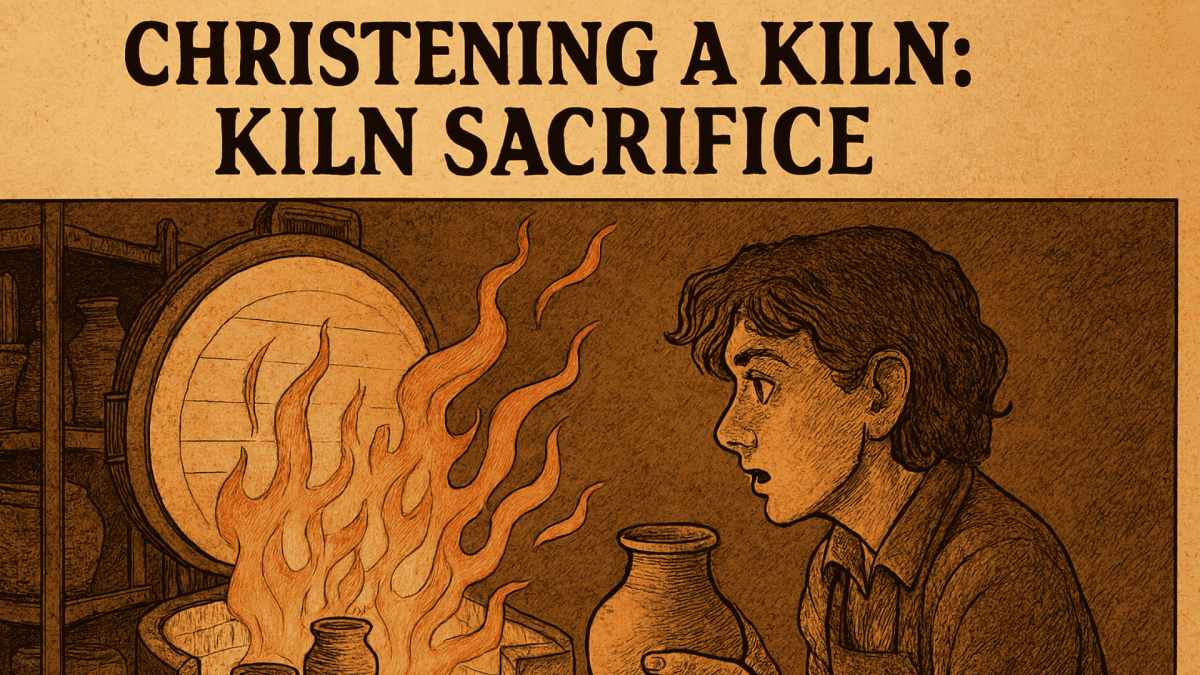
Christening a Kiln: Kiln Sacrifice
The most basic, inanimate purpose of a Kiln is to bake clay to a desired temperature in order to create a ceramic piece. However, there is much more to a Kiln than such simple descriptions. To fire a kiln is a laborious endeavor, each piece must be prepared well before it is set into the kiln, arranged carefully by hand. The temperature and timers must be set appropriately and double checked to ensure no error on the human side of the operation, and then, only then, can the kiln be allowed to play its part.
Kiln Caution:
A potter who is well attuned to their kiln, who may even love their kiln, will go through the motions with their kiln with well practiced grace, and often, it can take years of practice to memorize each and every in and out of a kiln. What then happens, if a blue-gilled potter decides that they too should have a kiln of their own? Oftentimes, disaster. Anyone experienced with the working of a kiln would tell you that, much like any other type of machinery, a kiln must be treated with the utmost caution and respect. The interior temperature of a kiln can reach up to 3000 degrees, and, rare as it is, a malfunctioning kiln could easily burn down not only whatever pieces were placed within it, but whatever is in its immediate vicinity.
Superstition:
Now, losing a piece to a kiln is bound to happen at some point, is it simply the nature of art. Cracks will occur, a hidden air bubble will pop, you will lose pieces, pieces that you are proud of, and largely, these losses will be due to something you have done, and you will learn from your mistakes. However, there are times where the kiln will simply decide to devour something you have placed within it.
You can do everything perfectly, do everything you can to prevent the worst from happening, but keep in mind, a machine a kiln may be, but alive it is, and each time we place anything within a kiln we are putting those things between the jaws of a hungry creature, all we can do is hope that the kiln’s appetite abates a little longer.
Sacrifice:
A loved kiln eats well over its lifetime. But what of a new kiln? A kiln that has yet to fire or feast is a temperamental thing, hungry and waiting. Never expect a new kiln to behave right away, that would be a fool’s errand, instead, the new kiln should be acclimatised. Run the new kiln through a sacrificial firing, stack the shelves empty save a singular piece that is intended to be fed to the kiln. The piece need not be something created from love, but it should have ample time and effort put into it to make it a physical investment on your behalf. The piece does not need to explode in the kiln, but it should be unusable for its designated purpose by the end of the firing.
After the first sacrifice, be sure to routinely thank the kiln after every successful firing and offer smaller sacrifices when possible. Sacrifices can range from animal crackers to faulty test-tiles, enough to satiate a kilns innate desire to consume whilst allowing your more cherished pieces to survive the firing. Following these simple steps may (Or may not) result in fruitful future firings.
Anatomy, Kitty Horrorshow.

Related Articles




0 comments on "Christening a Kiln: Kiln Sacrifice"